Film fixer in Namibia — Filming permits and locations Red dunes, dead trees and a coast of shipwrecks

I offer full fixer and production services in Namibia, one of the most filmed landscapes in Africa. It has the paperwork to match: a national film commission, a clear permit process, and rules worth knowing before the budget is set.

  • Film permitNamibia Film Commission
  • Lead timeThree weeks or more
  • RequiredA local production company
  • Pairs withBotswana, Victoria Falls

At a glance — Namibia

The short answer

Filming in Namibia needs a General Film Permit from the Namibia Film Commission, applied for at least three weeks before arrival and held with a local production company. Parks, drones, cities and communities each need further permission.

Services
Full fixer and production service in Namibia: permits, locations, crew, transport, accommodation and logistics
Filming permit
General Film Permit from the Namibia Film Commission
Lead time
At least three weeks before arrival
Local company
Foreign productions work with a Namibian production company
Crew
Temporary work permits for foreign crew, even for one day
National parks
Environment ministry permission, with an environmental officer on set
Drones
Namibia Civil Aviation Authority; restrictions near protected areas

Last reviewed . Field figures are indicative and confirmed at recce. Rules and lead times change, and I check them for every production.

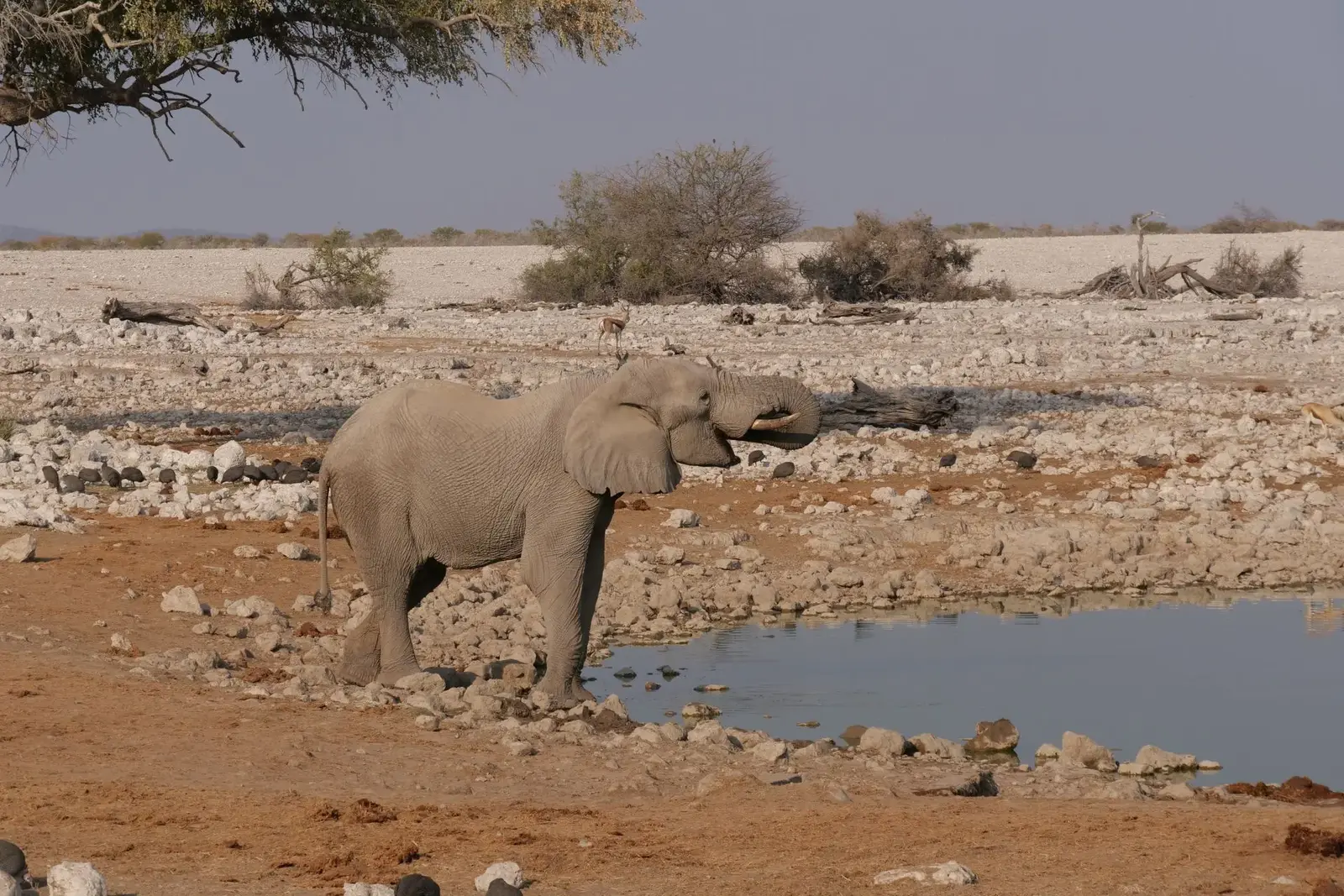
An elephant drinking at a waterhole in Etosha National Park Etosha

The country — The oldest desert

Why crews film in Namibia

Namibia packs more distinct landscapes into one country than almost anywhere: the red dunes and white clay pans of Sossusvlei, the fog-bound Skeleton Coast, the salt pan and waterholes of Etosha, and the abandoned diamond town of Kolmanskop filling slowly with sand.

It is sparsely populated, with long empty roads and huge skies, and its light is hard, clear and dependable for much of the year. The Namib Sand Sea and the rock engravings of Twyfelfontein are both UNESCO World Heritage Sites.

Permission — The Film Commission

Filming permits in Namibia

Visiting productions apply to the Namibia Film Commission for a General Film Permit at least three weeks before arrival, with a synopsis or script, a shooting schedule and details of the production. Working with a local production company is a requirement, so the permit is held with a Namibian partner and I run the production alongside them.

The general permit opens the door; specific locations need more. National parks need the environment ministry’s permission and an environmental officer on set each day, cities need permission for public spaces, and filming with communities needs their consent and a fair arrangement. Foreign crew need temporary work permits, even for a single day of filming.

Drones need authorisation from the Namibia Civil Aviation Authority, and flying near protected areas is restricted. Commercial operators should expect a long lead time for an operator certificate, so aerial-heavy productions should start that conversation first.

Locations — Where to point the camera

Filming locations in Namibia

The places that come up in briefs, from the dunes to the coast.

Sossusvlei

Dunes and Deadvlei

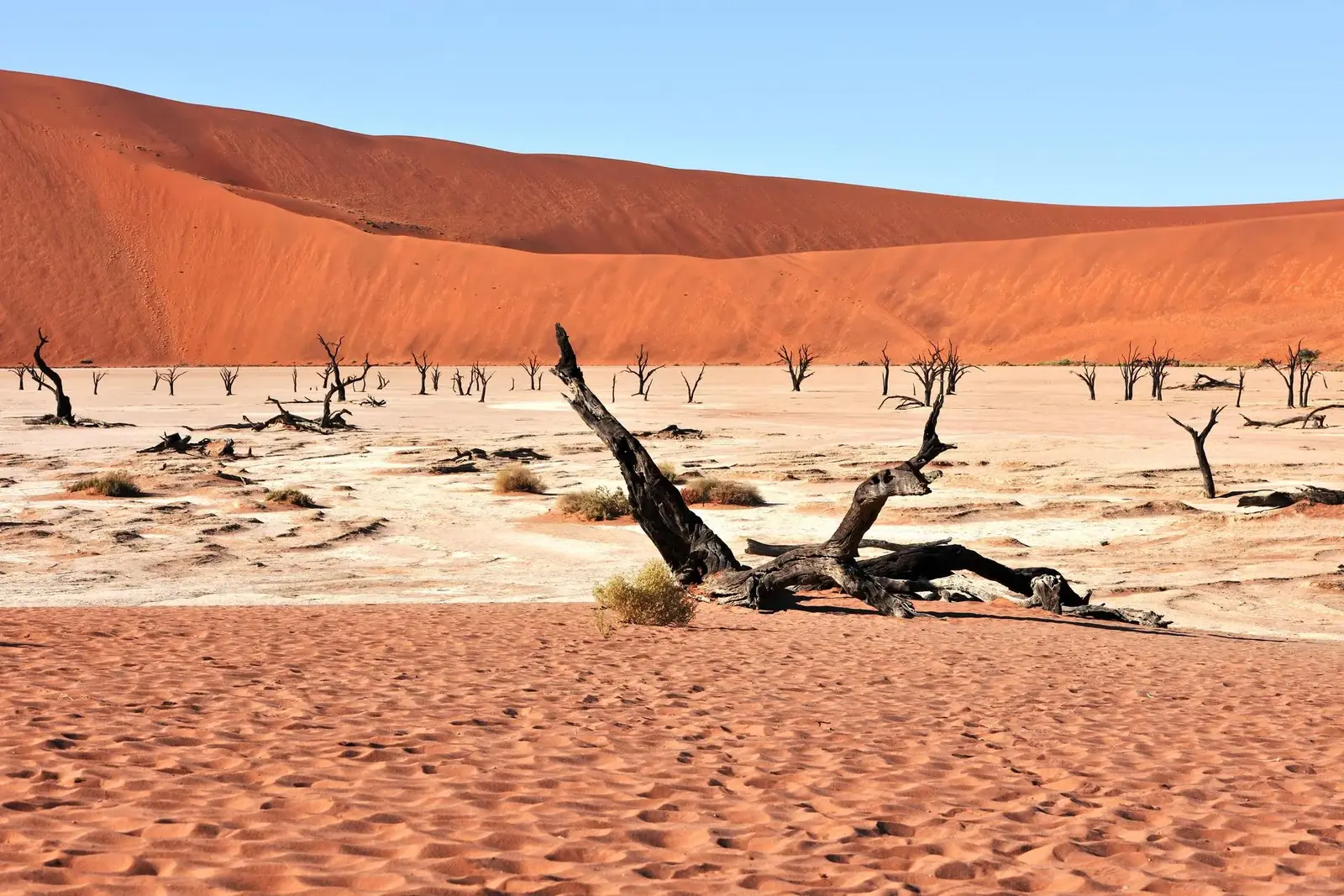
Red dunes and the dead camel-thorn trees of Deadvlei. Gates open at first light; the low sun is the shot.

Skeleton Coast

Fog and wrecks

Cold Atlantic fog, seal colonies and shipwrecks on an empty shore.

Etosha

Pan and waterholes

A vast salt pan ringed by waterholes that draw elephant, lion and rhino in the dry season.

Kolmanskop

The ghost town

A diamond-rush town near Lüderitz, half buried in sand. Access by permit.

Damaraland

Rock and rock art

Twyfelfontein’s engravings, desert-adapted elephants and red granite.

Swakopmund

The coast town

German colonial architecture between the desert and the sea, and a base for coastal shoots.

From Zimbabwe — Through the Zambezi Region

Combining Namibia with a regional shoot

Namibia’s Zambezi Region, the old Caprivi Strip, reaches east almost to Victoria Falls, and Namibia, Botswana, Zambia and Zimbabwe all meet near Kazungula. A route from the falls through Chobe and west across Botswana into Namibia crosses some of the most varied country in Africa.

Namibia and Botswana both work with ATA carnets, which helps the kit. The long poles are the Film Commission permit and the work permits, so they start first. See filming in Botswana and regional shoots.

Questions — Asked most often

What producers ask first

Short answers to the questions that arrive in nearly every brief. For anything specific to your production, ask me directly.

Q

Do you offer fixer services in Namibia?

Yes. I offer the same fixer and production service in Namibia as in Zimbabwe: filming permits and accreditation, location scouting, local crew, transport, accommodation and on-the-ground logistics, for film, documentary, news and commercial crews. You can hire me for a shoot in Namibia alone, or as part of a route across several countries.

Q

Do you need a permit to film in Namibia?

Yes. Foreign productions need a General Film Permit from the Namibia Film Commission, applied for at least three weeks before arrival, and must work with a local production company.

Q

Do foreign film crews need work permits in Namibia?

Yes. Foreign crew need temporary work permits to work on a film set in Namibia, even for a single day.

Q

Can you fly a drone in Namibia?

Only with authorisation from the Namibia Civil Aviation Authority, and flying near protected areas is restricted. Commercial operator approval can take months.

Q

Can you film at Sossusvlei and Deadvlei?

Yes, with the general film permit and permission for the national park, where an environmental officer accompanies the crew.

Next — Your project

Send the brief and the dates

Tell me what you want to shoot here and when. You will get a straight answer on the permissions, the timing and the cost before you book anything.