Production guide — Filming in Zimbabwe

What it actually takes to shoot here

The questions I answer most weeks, written down once. None of this replaces a conversation about your specific production, but it will tell you whether your schedule is realistic before you book anything.

01 — Permissions

Who you actually need to say yes

There is no single filming licence that covers everything. Permission is assembled from several offices, and they do not all move at the same speed.

National

National Arts Council

The filming permit itself. Everything else tends to hang off it, so this is the first application I lodge and the one that sets your earliest possible start date.

Revenue

ZIMRA

The revenue authority, for temporary import of equipment. They decide whether your kit clears in a morning or sits in a bond store over a weekend.

Local

City and rural councils

Street filming, road closures, public buildings and markets. Harare City Council for the capital, district councils elsewhere, and each has its own form.

Police

Zimbabwe Republic Police

Notification for anything in public, and escorts where crowds, vehicles or valuable kit are involved. Cheap insurance against a day being stopped.

Parks

ZimParks

Any national park or conservancy: Hwange, Matobo, Mana Pools, Gonarezhou. Comes with ranger escort conditions and its own fee schedule.

Heritage

National Museums and Monuments

Great Zimbabwe, Khami, rock-art sites. The slowest of the set and the least willing to be hurried, so heritage locations dictate your lead time.

Lead times move with the season and with how busy the offices are. I quote them per production rather than from a table, and I would rather tell you something is tight than discover it in week three.

02 — Kit and customs

Getting your equipment in and out again

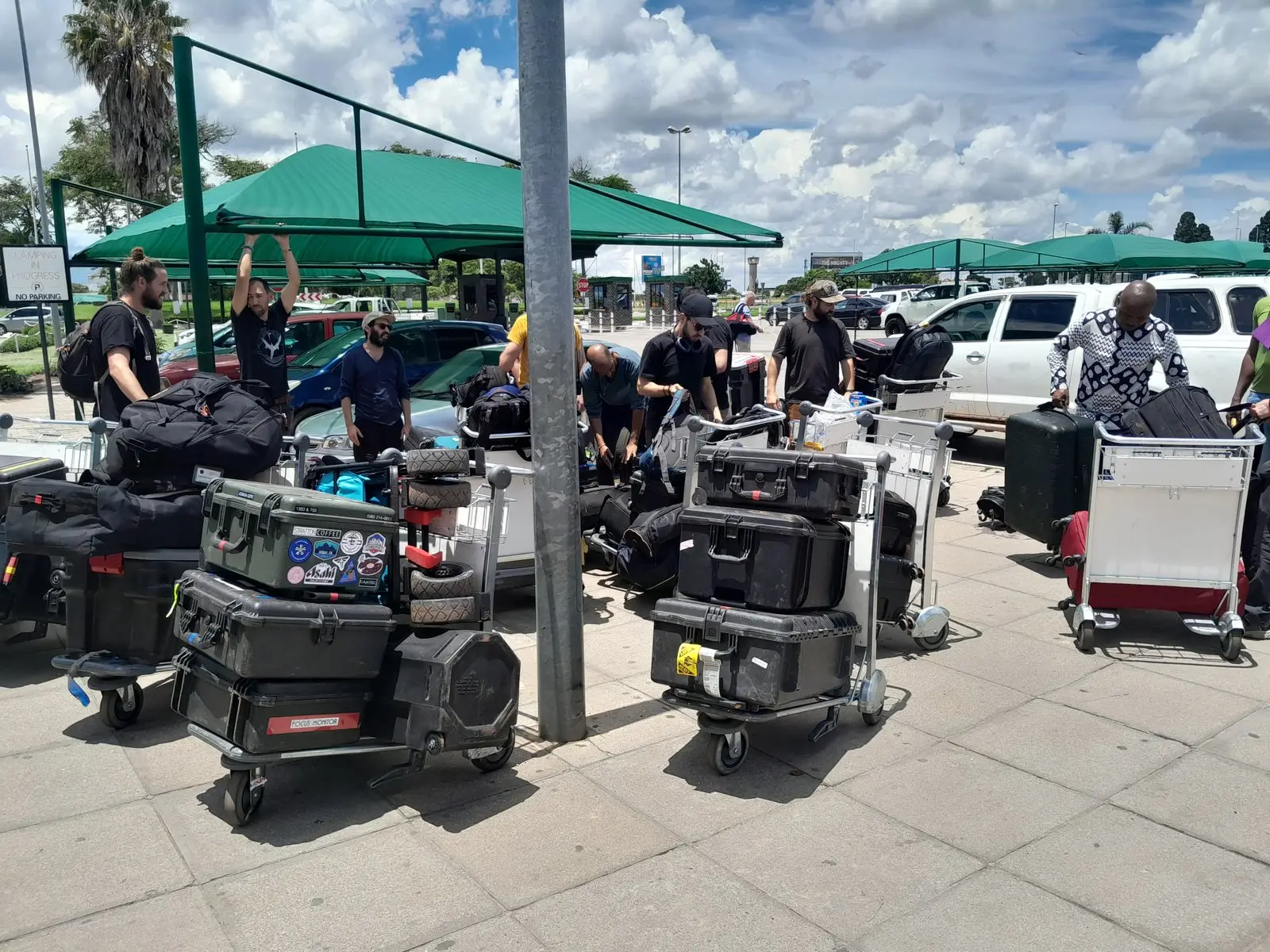
More foreign shoots lose their first day to customs than to weather. It is entirely avoidable with paperwork lodged in advance and a person standing at the airport.

Carnet

Carry one if you can

An ATA carnet makes temporary import straightforward and makes the exit clean, which matters as much as the entry. Where a carnet is not practical, temporary import can be arranged directly, but it needs more lead time and a deposit.

Lists

Serial numbers, not descriptions

Every body, lens, monitor and transmitter listed with its serial number and value. A list that says "camera kit" will cost you hours at the counter.

Batteries

Declare them properly

Lithium stock is the single commonest reason freight is held. Declare watt-hours, pack to airline rules, and tell me the total before you fly rather than after.

Drones

Cleared separately, and early

A drone is not covered by your filming permit. It needs its own authorisation, and flying one without it is the fastest way to have equipment confiscated and a production ended.

Firearms

Including replicas and props

Period pieces and anything with a weapon in shot need clearance in advance. Prop guns are treated seriously. Tell me at brief stage, not at the recce.

03 — People

Visas, crew and what things cost

Zimbabwe has good crew. The work is knowing who is good at the specific thing you need, and whether they are free on your dates.

01

Check the passports early

Visa routes differ considerably by nationality, and some are much slower than others. Send me the list of who is travelling at brief stage and I will tell you which ones need starting now.

02

Local crew is not a discount

It is a schedule advantage. People who know the road, the community and the weather will save you more time than a second camera would.

03

Rates are negotiated, not listed

Foreign productions get quoted foreign prices. Knowing the local rate for a vehicle, a room or a day's labour is worth more than any discount I could argue for afterwards.

04

Community filming needs consent

Introductions, permission and a fair fee, agreed before the camera comes out. Getting this wrong is how a production loses a location on day two.

04 — The calendar

When to come, and what it costs you

Zimbabwe has two useful seasons for a camera and they give you very different countries. Neither is wrong; the mistake is arriving in one expecting the other.

Nov to Mar

The rains

Green, dramatic skies, waterfalls at full volume. Also softened roads, afternoon storms that ground drones, and game that scatters because water is everywhere. Workable, but the schedule needs slack in it.

Apr to Aug

The dry

Clear light, hard shadows, reliable roads and game concentrated at waterholes. The easiest time to shoot and the busiest, so crew and vehicles book out further ahead.

Sep to Oct

The hot months

Dust, heat and haze before the rains break. Punishing in the middle of the day and beautiful at either end of it. Plan short days around the light.

Always

The offices close

The holiday period around Christmas and New Year slows every permit to a stop. If your dates fall in January, the applications want to be in before December.

05 — On the ground

The things nobody asks about until they matter

Small logistics decide whether a schedule holds. These are the ones that catch out crews who have shot everywhere else.

Power

Plan for it to go

Mains supply is not continuous everywhere. Unit base wants a generator and a charging plan, not an assumption.

Fuel

Carry it on long moves

On routes to Binga, Hwange or the far east, the next station may be dry. Jerry cans are part of the vehicle package, not an extra.

Signal

Assume none in the parks

Satellite comms for remote units, and a written check-in schedule so unit base knows where everyone is.

Money

Bring cash, budget in USD

Card acceptance is patchy outside Harare and Bulawayo. Local suppliers are paid in a mix, and I account for all of it in a form your production office can reconcile.

Medical

Know your evacuation route

Every remote location gets a written route to the nearest capable hospital and a plan for reaching it. Worked out before the shoot, not during it.

Time

Add an hour to every move

Distances are long and the last stretch is often unsealed. A schedule drawn in a London office usually needs an hour adding to each leg.

Next — Your project

Still not sure if your plan works?

Send me the outline and the dates. I will tell you what is realistic, what I would change, and what it costs, before you commit to anything.