Do you need a permit to film in Bulawayo?
Yes. Street filming needs the Zimbabwe filming permit plus Bulawayo City Council and police notification, usually 7 to 14 days.
Bulawayo has the widest streets in the country, a period centre that has barely changed, and a World Heritage site twenty minutes away. It is also the hub for everything in the south-west.
At a glance — Bulawayo and Khami
Filming in Bulawayo needs the national filming permit plus Bulawayo City Council and police for streets, usually 7 to 14 days. Khami Ruins, 22 kilometres west, needs National Museums and Monuments.
Last reviewed . Field figures are indicative and confirmed at recce. Rules and lead times change, and I check them for every production.
The city — KoBulawayo
Bulawayo is Zimbabwe’s second city and the heart of Matabeleland. Its centre was laid out at the end of the nineteenth century, with streets famously wide enough to turn a full span of oxen, lined with verandahed shops, civic buildings and some fine art deco. Far less redeveloped than Harare, it can stand in for several decades without much dressing.
There is plenty beyond the streets: the railway heritage and the steam locomotives of the Bulawayo Railway Museum, the Natural History Museum, the townships with their own architecture and music, and isiNdebele as the city’s first language.
Khami — World Heritage
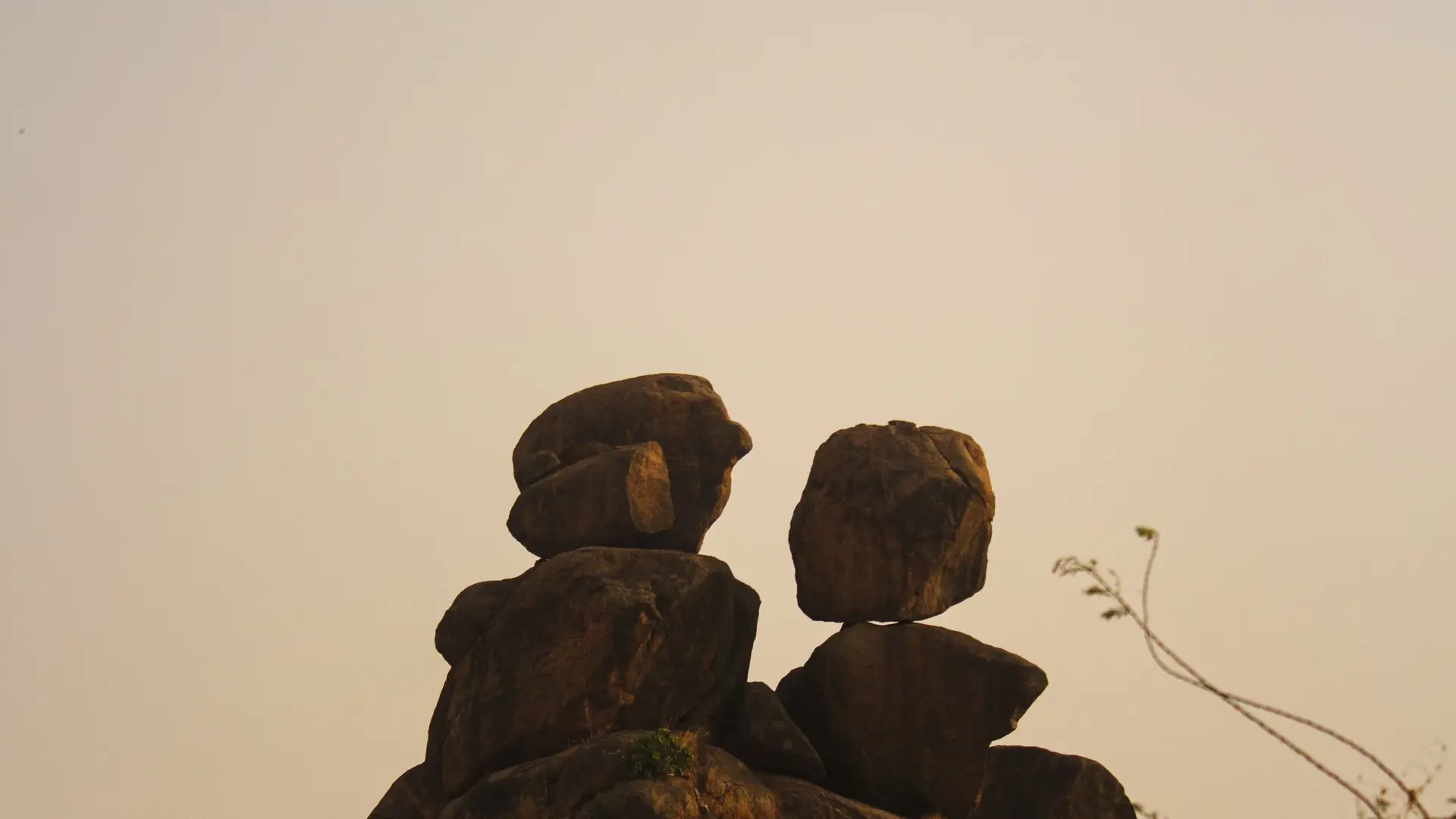
About 22 kilometres west of the city, Khami was the capital of the Torwa state after Great Zimbabwe declined, from around the fifteenth to the seventeenth century. Its stonework is different: terraced platforms built into a hillside, faced with chequer and herringbone patterns. It has been a UNESCO World Heritage Site since 1986.
It is far quieter than Great Zimbabwe, with few visitors, which makes it practical for a crew. Permission comes from National Museums and Monuments, with the same care over walls and walking routes.
In the city — Practicalities
Bulawayo is easier to film in than Harare: quieter streets, lighter traffic, and a centre that has kept its period buildings.
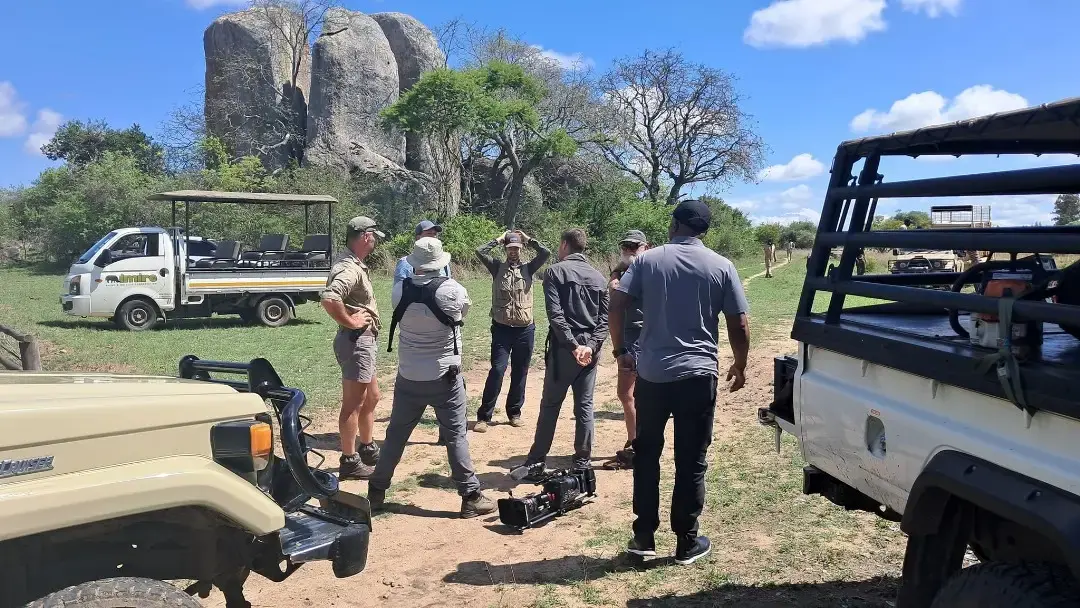
Street filming needs Bulawayo City Council and police notification on top of the filming permit. Allow 7 to 14 days.
The grid gives long, clear perspectives. First light down the avenues, before the traffic.
Lighter traffic makes street dialogue more workable, especially at weekends.
Ndebele-speaking crew and community liaison come from Bulawayo, not from Harare.
The hub — South-west Zimbabwe
Bulawayo is the base for the whole south-west. The Matobo Hills are 40 minutes south. The road north-west runs to Hwange, about four hours, and on to Victoria Falls. Great Zimbabwe is about three and a half hours east through Masvingo.
From Harare it is about five and a half hours by road, or an hour by air to Joshua Mqabuko Nkomo International Airport. The national side of the paperwork is in the permits guide.
Questions — Asked most often
Short answers to the questions that arrive in nearly every brief. For anything specific to your production, ask me directly.
Yes. Street filming needs the Zimbabwe filming permit plus Bulawayo City Council and police notification, usually 7 to 14 days.
About 22 kilometres west of the city. Filming there needs permission from National Museums and Monuments of Zimbabwe.
About five and a half hours by road, or an hour by air.
Yes. Matobo National Park is about 40 minutes away, and Hwange about four hours along the road to Victoria Falls.
Field notes — Plan the route
Distances in Zimbabwe are long, so the locations you put together matter as much as the ones you pick. These sit well alongside this one.
Next — Your project
Tell me what you want to shoot here and when. You will get a straight answer on the permissions, the timing and the cost before you book anything.