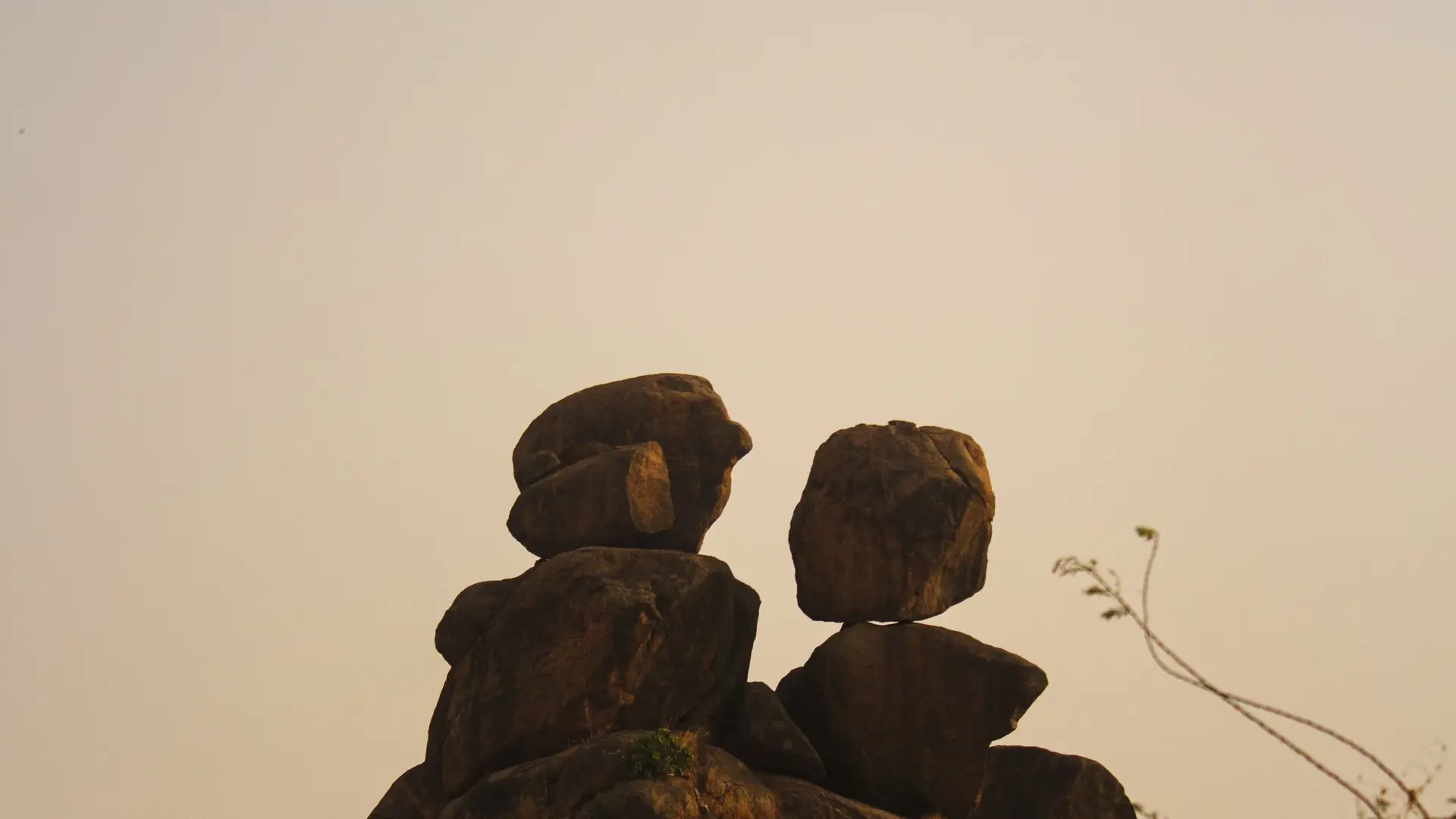
Filming in the Matobo Hills — Matopos Granite balanced in ways that do not look survivable

The Matobo Hills, the Matopos as many still call them, are a sea of granite domes and balancing rocks just south of Bulawayo. They hold some of the finest rock art in southern Africa and some of the country’s most sacred ground, and both shape how you film here.

  • From Harare6 h via Bulawayo
  • Best lightHard side light, 15:00 to 17:00
  • Sound floorWind on the exposed dwalas
  • Permit lead21 days, sacred-site protocol

At a glance — Matobo Hills

The short answer

Filming in the Matobo Hills needs the national filming permit, ZimParks for Matobo National Park, National Museums and Monuments for rock-art sites, and the custodians’ consent at sacred places. Allow about 21 days.

Permission from
The filming permit; ZimParks for the national park; NMMZ for rock art; custodians at sacred sites
Lead time
About 21 days
Best light
Hard side light, 15:00 to 17:00, and dawn on the domes
From Bulawayo
About 40 minutes by road
Names
Matobo is the official name; Matopos is the older one, still widely used
Pairs with
Bulawayo and Khami Ruins

Last reviewed . Field figures are indicative and confirmed at recce. Rules and lead times change, and I check them for every production.

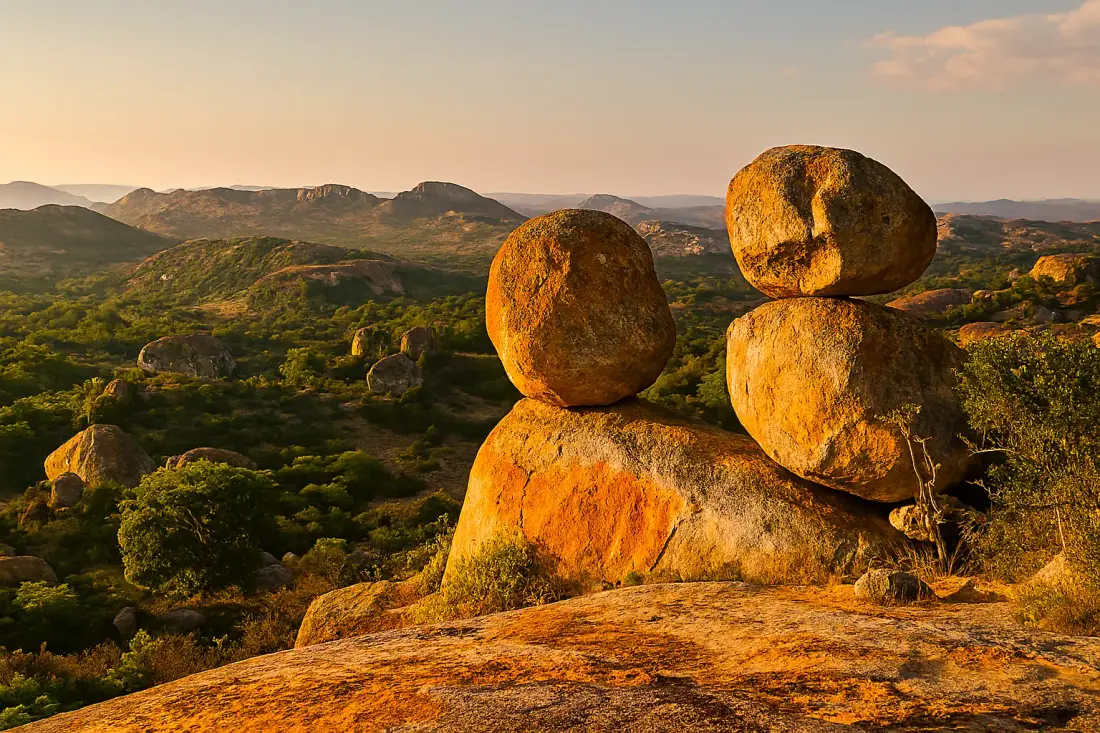
Balancing granite boulders in the Matobo Hills Matobo Hills

The place — Two billion years of granite

Kopjes, rock art and rhino

The hills are granite that has been weathering for more than two billion years into whalebacks, castle kopjes and boulders stacked on boulders; the bare domes are known locally as dwalas. Matobo National Park sits at the centre, about 35 kilometres south of Bulawayo, and the wider Matobo Hills have been a UNESCO World Heritage Site since 2003, for their rock art and living cultural traditions.

Inside the park are painted shelters such as Nswatugi and Pomongwe, a game area with white and black rhino, and Malindidzimu, the hill also called World’s View, where Cecil Rhodes is buried among the rocks. That grave is a sensitive subject in Zimbabwe, and how you frame it will be noticed.

Protocol — Sacred ground

Permission comes through people

Parts of the Matobo Hills are actively sacred. Njelele and other shrines associated with the Mwari tradition are still used for ceremonies, and their custodians decide who comes, when, and with what. Permission there comes through people rather than an office, and it takes time and respect to ask properly.

Rock-art sites are protected by National Museums and Monuments. Paintings must never be touched, wetted or lit with anything hot, and some shelters are closed to filming. The national park itself sits with ZimParks. Allow about 21 days in all and send me the treatment early, so I can tell you which places are realistic. The national side is in the permits guide.

Light and sound — Working the hills

The best two hours of the day

Granite domes look flat at midday and extraordinary either side of it. Build the schedule around the light, not the map.

Dawn

Domes against the sky

Climb a dwala before sunrise for silhouettes and long views across the hills.

Afternoon

Side light

From about 15:00 the low sun throws the boulders into relief. The best two hours of the day here.

Sound

Wind on the rock

Exposed domes catch the wind. Record interviews in the lee of a kopje.

Wildlife

Rhino on foot

Rhino tracking is done with park rangers and is not a set you control. Budget time, not shots.

Access — From Bulawayo

Getting to the Matopos

Bulawayo is the base: about 40 minutes by road to the park, with lodges in the hills themselves. From Harare it is around six hours by road, or an hour’s flight to Bulawayo.

Combine it with Bulawayo and Khami, and carry on west to Hwange and Victoria Falls. Drones over the park or the rock art need park and heritage consent as well as aviation clearance; see drone filming in Zimbabwe.

Questions — Asked most often

What producers ask first

Short answers to the questions that arrive in nearly every brief. For anything specific to your production, ask me directly.

Q

Is it the Matobo Hills or the Matopos?

Both names refer to the same place. Matobo is the official name and the name of the national park; Matopos is the older name and is still widely used.

Q

Do you need a permit to film in Matobo National Park?

Yes. You need the Zimbabwe filming permit and ZimParks permission for the park, plus National Museums and Monuments for rock-art sites. Sacred sites need the consent of their custodians. Allow about three weeks.

Q

Can you film the rock paintings in the Matobo Hills?

Often yes, with heritage permission and strict conditions: no touching, no wetting the paintings and no hot lights. Some shelters are closed to filming.

Q

How far are the Matobo Hills from Bulawayo?

Matobo National Park is about 35 kilometres south of Bulawayo, around 40 minutes by road.

Next — Your project

Send the brief and the dates

Tell me what you want to shoot here and when. You will get a straight answer on the permissions, the timing and the cost before you book anything.